In todays world, the desire to get back to basics is becoming more and more desirable. Our hope is that you will find some of the knowledge we share a benefit to you, to get closer to your dream of a healthier lifestyle, less dependent on assembly lined, processed, manufactured items.

Our goal is to help you find ways to use modern conveniences to allow you to live the life you want to live, and raise your family with the traditions that are important to you.

Grab a cup of coffee, or a glass of tea, and join us as we share our lives, our family and our knowledge with you.


Thursday, April 9, 2015

March Gathering 2015


I just realized that I never finished this post about our March 2015 Gathering.  Sorry about that!  On March 8th several joined us for an informal Gathering at the Matthews Farm near Miller, Missouri.  We used the afternoon to visit, mingle and share ideas.  The children played together....in the woods...in puddles...the adults got to know one another and shared homesteading stories.  Everyone had a great time.  As the afternoon wore on, we used the tractor for an old fashioned hayride to take people and food to The Gathering Place.  We had tons of great food and more visiting time.   As darkness closed in, the bonfire warmed us and added to the atmosphere.

We had guests from Stotts City, Neosho, Cape Fair, Ash Grove, Everton, Bois D'Arc and Brighton.  Janet Taylor popped in from Collins, but couldn't stay for the meal.  Hopefully, she will be able to bring the family and spend more time next time.   We hope to make the time for monthly events.  Classes, Demonstrations, Gatherings, etc.  If you have any ideas you would like to see, please share with us and we will try to accommodate the ideas.

It looks like April will bring a day of Lard Rendering.  You can come watch and learn, participate in the process. Bring a picnic lunch, or bring hot dogs to roast over the fire after the rendering is complete.  We look forward to learning and growing together as we all learn ways to live a Modern Pioneer lifestyle here in southwest Missouri.


Just a few shots of the visiting and playing that went on during the afternoon and into the evening.


Some of the guests had to be torn away from visiting to eat.


Blankets and Jumper Seats made even the youngest guests comfortable.


Larry and Sharon finally got the food line started.


The coffee stayed warm and so did Dennis as he stayed close to the bigger fire for awhile.


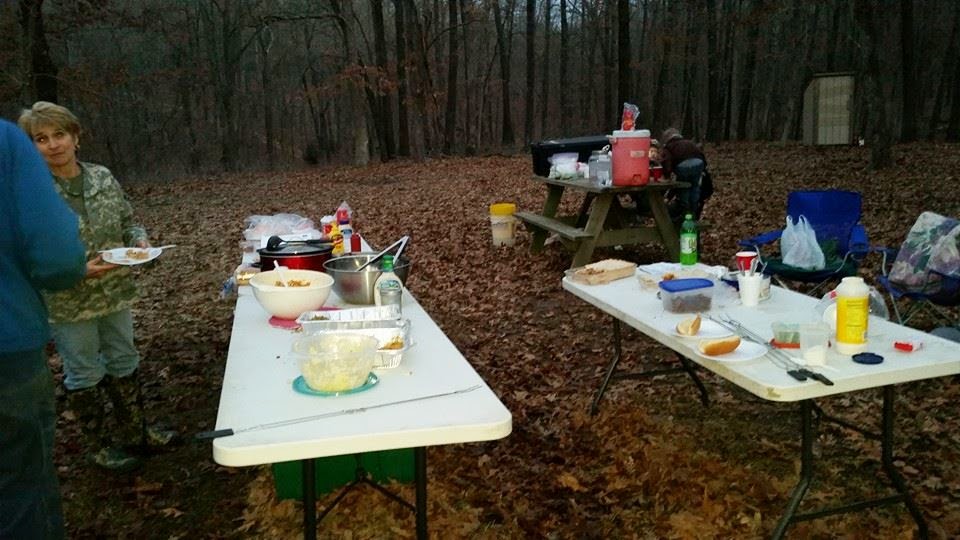
Everyone contributed to a great meal. 4 tables of food were spread before the group.
And the visiting continued among Kyle, JD, Justin, Melody, Willow, Lance, Cindy, Becky and Tom as Dennis kept watch on the bonfire.


The trees stretched out and gave the kids plenty of room to run and play


Our transportation for the evening.


No Gathering is complete without fresh coffee


Casey, Willow, Dennis, Owen and Maddie enjoyed hitching a ride back to the house and their cars as the evening drew to a close.


Lance, Lilly and Savana watched over Erin, Bella and Hunter on the ride back.


Becky carries our youngest guest, Gracie to wagon for the ride back to the house.


Kathy, Tom, Melody and Justin just kept on visiting.
We were honored to have each of you join us in March for the first Gathering at the Matthews Farm and hope there will be many more to come and new guests each time.  Join us at SW Missouri Homesteaders on Facebook for future gatherings, classes, demos and events.

Thursday, April 2, 2015

Nana's Homemade Peanut Butter


At our house we go through A LOT of peanut butter.  We eat peanut butter sandwiches, peanut butter and crackers, on toast, on pancakes.....we like several candies made with peanut butter. Papa and I even put peanut butter on our ice cream.  We've noticed lately that we both get some pretty serious heartburn especially after eating peanut butter, so I decided to try making our own and see how we like it, and if the heartburn issue will resolve.  I was amazed at how easy making your own actually is.  It can be made in a food processor or a heavy-duty blender.  I don't own a food processor, but may have to invest in one soon. The uses for one are varied to the point I think it would be a wise investment.  Remember, the premise behind being a Modern Pioneer is not to do without and create an added work load, but to provide better simpler things for youself and your family, using the modern conveniences available to us.  If we ever go off grid, that will change, but for now, we use our resources to our advantage.


I have a Vitamix. It is an old one, not like any that they sell these days, but it works great so that is what I decided to use for my first batch of peanut butter.  As you can see, the pusher is narrow and wooden and the container is metal, rather than transparent like the ones sold today.


I gathered my supplies.  The list of ingredients couldn't be more simple....Peanuts. That's it; Peanuts.  I bought some bulk at a local health food store before Christmas for candy making and ended up not using them. They have been vacuumed sealed in a half gallon mason jar since then.  I measured out 1 pound for my first batch.


The peanuts filled the container about 1/3 full. After about 45 seconds of blending, I took the top off to check progress.  The peanuts were beginning to look crushed, although I did have some trouble getting my pusher to work them down well. I think the wider one made today would make that job go much faster. Or the addition of a food processor to my kitchen which would make pushing down the peanuts unneccessary.  (Yes, I am trying to talk myself into buying a food processor or more importantly building my case to convince Papa the we NEED a food processor! ;) )

After more grinding, stirring, grinding and stirring, we got a pretty nice consistency for peanut butter.  It is not as creamy as store bought, but the flavor is great. Once we get used to the consistency I think this will be a kitchen staple.


Because of no additives, this does need to be kept in the refrigerator.  As I poured it up in the jar, I noticed that there was some not so creamy parts in the corners of the container.  This will be solved with added stirring or the purchase of a food processor which will have a round container and no corners for the little bits to catch and hide.  Papa and I have both tasted this and no heartburn! I think we have a winner! One more thing we can do for ourselves, with help of our modern conveniences.  This is what being a Modern Pioneer means to me. :)


Thursday, March 26, 2015

Homemade Convenience

I've been putting together several homemade mixes. I love the convenience of pre-packaged foods when the days are busy, I'm not so in love with the price tag or the additives that I can't even pronounce.  So far I've come up with several things that I love!  I have my own pepper gravy mix, that makes delicious biscuits and gravy a snap. I have a mix for cornbread that tastes every bit as good as the blue and white box from the grocery store shelf. Homemade brownies are a snap to bake from my brownie mix. And, just today I found an awesome way to create my own chocolate milk mix that should keep the grandkids happy when they visit Nana and Papa.  I've also made my own taco seasoning, Brisket Rub and Ranch dressing mixes.  Having all these things I mix myself on hand makes cooking convenient and satisfying for the Modern Pioneer in me.  I get the modern convenience along with the satisfaction of making my own, not to mention the fact that I know what goes into each and every mix.  All these things are important to me when feeding my family and staying within a frugal food budget.  All of these recipes can be found on the internet and in other sources. Some have been passed on so many times that there is no way to give the proper credit to the original creator.  With that being said, know that each of these is something I have found and tweaked to meet the needs and tastes of my family. After the recipes I will share some of my storage suggestions.

Pepper Gravy Mix
5 Cups Flour
2 Cups Powdered Milk
1/8 - 1/4 Cup Black Pepper
1/2 Cup Cornstarch
1/8 - 1/4 Cup Salt

Mix together and store in an airtight container.  Use 2 TBS bacon drippings or other fat, heat over medium heat. Add 3 - 4 TBS mix sprinkled over bacon grease using a fork or whisk, consistently blend until well incorporated and no lumps.  Add 1 1/2 Cups water or milk and whisk well.  Cook until thickened, stirring constantly.


Cornbread Mix
7 1/2 Cups Flour
4 1/2 Cups Cornmeal
1/3 Cup Baking Powder
6 tsp salt
2 Cups Sugar

Mix together and store in an air tight container.  Preheat oven to 350.
Combine:
2 1/3 cups mix
2 eggs
1/4 Cup melted butter
2 TBS vegetable oil
1 Cup milk
Pour into a 10" iron skillet. Bake 30 minutes or until golden brown.

Brownie Mix
8 Cups Sugar
6 Cups Flour
1 1/2 TBS baking powder
1 TBS salt
2 Cups Cocoa Powder

Mix together and store in an airtight container.  Preheat oven to 350.
Mix:
2 1/4 Cups Brownie Mix
2 Eggs beaten
2 tsp vanilla
1/2 Cup nuts or chocolate chips (optional)
1/3 Cup melted Butter
Combine ingredients and mix until smooth. Pour into a greased 8" square pan. Bake for 30 - 35 minutes until the center is set.  Cool, Cut, Serve.

Taco Seasoning
1/2 Cup + 2 TBS Chili Powder
2 1/2 tsp Garlic Powder
2 1/2 tsp Onion Powder
2 1/2 tsp Dried Oregano
2 1/2 tsp Paprika
1/4 Cup + 1 TBS Ground Cumin
1/8 Cup Salt
1/4 Cup Black Pepper

Use 2-3 TBS + 3/4 Cup water for each pound of browned ground beef.

Brisket Rub
2 TBS Brown Sugar
2 TBS Chili Powder
2 TBS Paprika
2 TBS Salt
1 TBS Garlic Powder
1 TBS Onion Powder
1 TBS Black Pepper
1 TBS Cayenne Pepper
2 tsp Dry Mustard
2 tsp Ground Cumin

Mix ingredients and store in an airtight jar. Prepare meat for slow cooking in oven, on grill or in smoker. Rub dry mix over all exposed areas of the meat. Refrigerate overnight. Cook until done.  This mix has a slight kick that is outstanding!

Ranch Dressing Mix
1/4 Cup Black Pepper
1 1/2 Cup Parsley Flakes
1/2 Cup Garlic Salt
2 TBS Salt
1/4 Cup Granulated Garlic
3/4 Cup Granulated Onion
2 TBS Dill Weed

Mix and store in an airtight jar.  Mix 1 TBS mix with 1 Cups Mayo, 1 Cups Buttermilk, 3/4 Cup sour cream and 1/2 tsp lemon juice.  Refrigerate for a couple of hours before serving and refrigerator any remaining dressing.  Makes a little less than 1 quart.

Chocolate Milk Powder
2/3 cup cocoa powder
1/3 cup sugar
pinch of salt

Mix together and store in an airtight container. Use 1-2 Tablespoons per cup of milk.

Hot Chocolate Mix
11 Cups (8 quarts) powdered milk
3 Cups (6 oz) coffee creamer
8 Cups (2 lbs) Chocolate milk mix
3 3/4 Cups (1 lb) Powdered Sugar

Mix all ingredients and store in an airtight container.  This makes a MASSIVE amount, thus making it a great project for a friend or two to bring the ingredients together and share the end result.  Add 1-2 TBS to a cup of hot water, stir to thoroughly mix. Enjoy!

Now that I've shared a few of the recipes, let me share some of the ways I store them.


I prefer to use glass containers because there is nothing to hold an odor that could taint a flavor in any of the mixes. However there are times that due the quantity of the mix, and/or the availability of glass jars I may use my Tupperware containers.   When I try something new, and am not sure it's a keeper for the pantry, I will just write directly on the glass with a permanent marker.

When I am ready to create my label, I include the name of the mix for easy identification in the Pantry. I put the recipe for the main mix directly on the label so that when I run out, I can mix it up without having to hunt down the recipe.  I also include the instructions for its use, so that, again, I don't have to track down a recipe to use the mix.  Yep.....guess I'm a little lazy organized when it comes to the kitchen.


For a jar that has an opening that will fit a canning jar ring, I can save the top of my salt boxes to place under the ring, giving me a convenient pour spout.  I started out with the instructions hand-written on this lid.  This is not as "pretty" as being on the label, but is just as useful.  I later added the label with directions included.


Enjoy! I will share more mix and other recipes as I think of ones you might find useful. If you have any special mixes you would like to share, feel free to post them in the comments. I am constantly looking for new ideas.


Tuesday, March 24, 2015

Pork Butchering 2015

Last year we bought two young piglets for the sole purpose of having them fill our freezer. In the past, butchering was done in the fall, and today many people still butcher in the fall.  We had planned to, but let the time get away from us.  There were times when we wished we had not over-wintered the pigs. Chopping ice and carrying water in the winter time is not my idea of a good time, but it didn't take much more time to take care of the pigs than it did to take care of the chickens, turkeys, rabbits dogs and milk cow and every day added more weight which added more meat.

Historically, butchering was done in the fall for many reasons.  In the pioneer days, you "laid away" for the winter months when the weather made it difficult to hunt, impossible to garden, and foraging was minimal.  The cold weather also made long term storage more probable.  With modern conveniences, the time of year you butcher is not critical as it used to be. We can put meat in the freezer at any time and not give a thought to the current and upcoming weather conditions.  However, if you plan to cure pork, having the cool days of Fall on your side it nice. This year we chose not to try to cure all the hams from the two pigs, as they need to remain 40 degrees or below during the curing process.  If your ham is 14" thick, it takes a minimum of 14 days in a row that must be below 40 degrees, not likely in the spring time.  As Modern Pioneers, we can use a cooler or refrigerator to maintain the temperature at any time of year, making the time for butchering much more flexible than in times past.  But we could find ourselves short on refrigerator space if Serena calves and freshens and we start to get fresh milk before the hams are finished.

With the day's weather predicted to be sunny and in the 60's, we prepared to start the days activities.


We began by visiting Pork and Chop in their pen, one last time.  It was muddy in the pen, and Pork got a last laugh on us, by rolling in the mud and getting VERY dirty, just before his demise.


It took JD lots of water and several minutes to get Pork cleaned up enough to be skinned.


The skinning is done in two steps. First step it to use a razor sharp knife and cut just through the hide in strips from neck to tail about 2-3" wide then cut through the hide around the neck.


Then grab the top of the strips, using the claw skinning tool, and pull downward.  The picture above is not the best example. There is normally minimal, if any, fat that is removed with the hide.  


Obvious difference in the the skinned side and the un-skinned side and it only takes a few minutes to remove the tough hide and the meat remains clean. It's easy, quick and clean. Win! Win! Win!


After the hide is removed, the feet are removed, as is the head.  The pig is then gutted, but I will spare you those pictures.  From the hogs guts, the liver, heart and kidneys are considered a delicacy by many. In our family, although, I do not feel we are wasteful, we choose to bless the dogs and my sons hogs with those healthy tid-bits.  The entrails can be carefully removed, washed and used as sausage casings.  I chose to buy some at the store this time, another option that Modern Pioneers have over our forefathers.  Pork is now ready to be taken to cutting table and made freezer ready.


The men made quick work of cutting off the hams and shoulders and removing the tenderloin for boneless pork chops and chunks of tenderloin.


Justin and JD made separating the tenderloin from the ribs look easy.  All the fat scraps were chunked up and placed in a tub for grinding to render lard for use in frying and baking.  The cracklings are saved to flavor beans, cornbread and various other dishes.  The various meat scraps were chunked up and saved in a different tub to be ground into sausage.


The meat scraps were seasoned for sausage, ground and placed in 1 pound packages.  Melody and I  ground all of Pork on the same day we butchered, but Chop wasn't ground until the next day.  If the meat is allowed to become very chilled, to the point of being almost frozen it seems to grind much easier.


Morton's sugar cure was worked into the belly meat that will become bacon.  It will "cure" in the refrigerator for about 1 day per inch of thickness, then be soaked in fresh water daily for 3-5 days to remove the extra salts and spices.  We will then hang it in the smokehouse and give it a good dose of hickory smoke for flavor.


While grinding the sausage from Chop, we decided to try some sausage links.  The only casings I found locally were large, so that is what we used.  By placing the casing over the sausage tube, the meat/fat/spice combination was put directly into the casings. We let them sit in the refrigerator overnight, then I hung them from the oven rack and cooked them at 150 - 200 degrees for 3 hours. The results are what you see below.


We learned a few things. First, we did not fill the casing tightly enough. Second, we should have pricked the casings just enough to let the fat escape and the casing draw in around the meat. Third, we will want a coarser grind with less fat added next time. And finally, we loved the seasoning....I bought some packaged seasoning from our local Price Cutter's meat department and added my own extra red pepper flakes and sage and it came out perfectly seasoned.  Maybe one of these days I will perfect my own seasoning, but you can't learn everything at once.

It was a full day of work, good time with friends and family, and very rewarding.  We hope to make it a tradition at our place, and are glad we have the modern conveniences that make it possible to get so much done in one day, and the convenience of picking the time that is convenient instead of letting the seasons dictate our lives the way they did our forefathers.  I am proud to gain the knowledge and the skills to keep the past alive. You never know when the past will come in handy in the future. At one time our ancestors were the Modern Pioneers.

Thursday, February 26, 2015

Crackers, Crackers, Crackers!

When the winter weather is blasting, there is nothing more satisfying, than a home-cooked meal. In the mood for chili during a recent cold spell, Papa was disappointed that we were out of saltine crackers.  I had seen recipes for saltines and they sounded very simple, so I decided to try them for myself. They were as simple as they sounded and with a little practice for the right thickness, these will be one less thing that will be purchased for the Matthews' Home in the future!  The chili is made with ground venison that I killed last fall, homecanned pinto beans and homecanned chili sauce that I put up last summer. It took about 5 minutes to brown the venison and dump everything in the crockpot. Then when it was time to eat, about 15 minutes for the crackers. This is "fast food" at its finest.

In my research to find saltine recipes, I found that most were the same basic recipe. A few had baking powder added.  This time I used the basic recipe without the baking powder but will try adding a teaspoon of baking powder next time to see which I like best.

The basic ingredients:  1 C. all-purpose flour
                                  1/2 tsp salt
                                  2 TBS shredded butter
                                  6-7 TBS water
                                  melted butter
                                  additional salt


Mix together flour and salt. Shred butter into bowl with hand grater. This technique makes mixing the dough much easier than trying to "cut" it into the flour.  I always have a hard time cutting my butter into biscuits etc.  It seems to me that cold homemade butter is much harder than what you buy at the store. It makes me wonder just what else is added to the purchased butter....but I digress.  After mixing to the point of looking similar to cornmeal, add the water 1 TBS at a time until you have a soft dough that is easily rolled out with a rolling pin.

Divide dough into two or three sections. Using extra flour to keep dough from sticking to countertop and rolling pin, roll out dough until very thin (1/8th inch works well).  Transfer your rolled dough to a baking sheet covered with parchment paper.  A side note: baking on parchment paper makes clean up so easy.  Since your food has never touched your baking sheet, simply wipe with a damp cloth, dry and put away.  The parchment also seems to make baking more even, without worry about those older dark sheets causing over baking.


Brush with extra melted butter and sprinkle with extra salt.  At this stage you could brush with olive oil and add other herbs to taste for a special treat.  I scored mine with a serated wheel that I purchased for a quarter at my local thrift store. It is perfect for this process, but you can also score with a pizza cutter. I also used a fork and made some holes in the crackers....just because it made them look more like the crackers we are familiar with.

Bake at 400 for about 15 minutes, rotating the baking sheet once for even cooking.  Watch them closely the last few minutes, they can burn quickly at the last stage of baking.  They will also harden as they cool, so they may be a little soft when first removed from the oven.


Once they cool enough to break apart without burning your fingers, break apart and eat immediately or store in an airtight container.  Next time you find yourself out of saltines, try this simple recipe. You may find that you, too, will cross saltines off your grocery list forever.

Stay tuned. I also made wheat thins, but want to tweak my recipe and process just a bit to make them more flavorful before I share it.


Monday, February 23, 2015

Winter projects

One of the myths of Modern Pioneering and Homesteading is that there is little work to do in the winter. For the original Homesteaders, the winter was a test that was often not passed, with failure costing the ultimate price.  Many died during the winter months, from lack of preparedness, malnutrition, succombing to elements or other reasons.

Thankfully for us, our lifestyle prevents the deadly cost of winter, but the reality is, there is just as much work to do in the winter keeping the animals safe, warm, well fed and watered as there is in the warmer months.  If you want to make the summer ahead the most productive and efficient, you must plan ahead.  You must complete projects that don't get finished during the planting/growing/harvesting seasons.  Currently we have two major projects in the works that will benefit our lives for many seasons and years to come. We are building a greenhouse and remodeling a building to create a harvest kitchen/butchering area and milking area to use throughout the year.

I will eventually post on both projects on their own, with more detail, but for now here are some sneak peaks at these two projects.

Our new greehouse will be small, but hopefully large enough to start all the seedlings we will need and to get a fodder system started for feeding the chickens, turkeys and rabbits. It is 8 x 12, and will have cost us just about $200 to complete. We utilized several used pieces and at this point, I am very happy with the project.  We have moved it outside so that we have our shop back available to use for other projects, but the plastic has not been placed on it yet. As soon as the weather cooperates a bit, we will get this finished up and I will start some seedlings.

On a different front, we have decided to renovate this building. For the past few years is has been a catchall for various items, stored chicken feed and house broilers, pullets and turkeys on the back side.

 The siding has been completed thanks to Hammer Down Construction and Fencing, LLP, a local construction crew that branched off BKR Construction.  You can also contact the original BKR Construction that specializes in complete structures in larger area than just Southwest Missouri.  I recommend both whole-heartedly.  I'll post more pictures as we complete this project. The plan will be to have a harvest kitchen in the area with the white door where will butcher, can, dehydrate, make cheese, etc.  This area will also serve as a place to store our homecanned goods. The back lean-to will be completed into a milking parlor, where we can milk Serena out of the weather and have the milker washing, and cold milk storage in the harvest kitchen. Lots of pluses to our plan, not the least of which keeps much of the mess out of our family kitchen.

We have already completed our first Rabbit hutches. We need to make probably one more for growing out. But when we get culled down, we may have enough room. No further rush on rabbit projects. Though we do have one set of 6 cages that need some work, but for now that can wait for spring and warmer temperatures.

When it looks like this outside, it makes indoor projects all the more appealing.

But for all the inconveniences we are given during the winter, God still leaves us with beauty beyond measure.  As much work is created during the winter weather episodes, there is also as much beauty. God gives the plants and animals a rest cycle, and Modern Pioneers can benefit from it as well.  As difficult as we may think it is, imagine what our ancestors went through, when mere survival was a the measure of success after every winter.


More baking gets done in the winter than the summer. I've been trying some new recipes and tweaking some old ones.  I've made soft pretzels, and have worked on a couple of recipes for bread made from my home-ground oat flour and whole wheat flour. All have been delicious.

Being a Modern Pioneer we are blessed to be given a time to get our ducks in a row for the next year, rather than making sure we survive to plant the next crop.  We are truly blessed to live the life we life. I snapped this picture of one of our grandsons a couple of years ago, after I got control of my laughter.  Even at his young age, he understood the importance of keeping your ducks in a row.

Now it's time to get to planning the garden. It will be planting time in a few short weeks.